Bucharest digital nomad opportunities in Bucharest, Romania Where Parisian Elegance Meets Balkan Soul for Under $1,500 a Month
Explore Bucharest travel and Bucharest cost of living for remote professionals
New: The Living Borderlessly Audio Guides 🎧
Take our destination deep dives on the go! We’ve officially launched the Living Borderlessly Audio Guide on Spotify.
Whether you’re commuting, at the gym, or planning your next move, join our AI hosts as they break down the tactical data for our featured cities, from the $800/month lifestyle in Chiang Mai to the geoarbitrage secrets of Valencia.
|
Bucharest, Romania's capital, is rapidly emerging as a prime destination for digital nomads seeking a blend of affordability and vibrant culture.
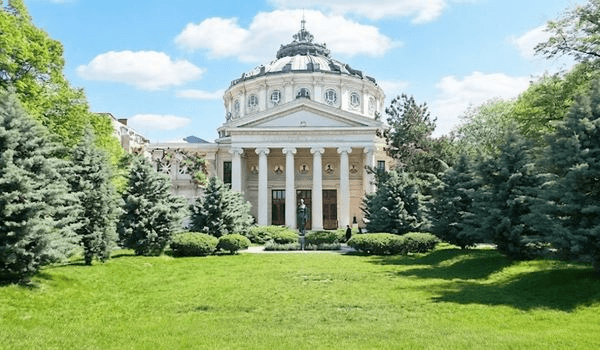
Most travelers know Bucharest as the chaotic stopover on the way to Transylvania's castles, a place to endure for a night before escaping to the "real" Romania. But for those who stay, the city reveals itself as something far more compelling. Once dubbed "Little Paris" for its elegant 19th-century architecture and French-inspired boulevards, Bucharest is a city of fascinating contradictions: Orthodox monasteries sit in the shadow of the colossal Palace of the Parliament, belle époque villas share neighborhoods with brutalist communist blocks, and a new generation of tech entrepreneurs and creatives are breathing life into a city with deep historical roots. For the digital nomad, Bucharest offers something increasingly precious in Europe: authenticity. This isn't a city curated for tourism; it's a real, working capital where people live, work, and argue about politics in sidewalk cafes. The city's energy is palpable, a mix of Latin warmth Romanians will tell you they're not Slavic, Balkan resilience, and a distinctly European sophistication that catches newcomers off guard.
The Truth
A professional in Denver pays $2,200 monthly for a one-bedroom apartment in a trendy neighborhood like Capitol Hill, often without utilities or parking included. Making $80,000 annually, but after rent, car expenses at $500, health insurance at $450, and student loans at $400, saving barely happens.
Remote workers in Bucharest's best districts, like Dorobanti or Primaverii, pay $600 to $900 for a one-bedroom apartment in an elegant interwar building with high ceilings and original parquet floors. Evocative local details like the sound of trams clattering down Victory Avenue, the smell of grilled mici wafting from Herastrau Park on weekends, and the ritual of Sunday afternoon people-watching at a Cismigiu Gardens terrace fill the air. "I moved here for the affordability," one remote product manager shared in Bucharest expat forums. "But Bucharest surprised me with its incredible energy. Specific examples of local experiences like being invited to a garden party in a private backyard in the Primaverii neighborhood, discovering underground electronic music venues in repurposed factories, and actually feeling like I'm part of a city that's going somewhere. The western city felt stagnant and transactional. Bucharest delivers genuine momentum and human connection."
Same income. Different costs. Different unique quality: living vibrantly at the intersection of history and the future.
Bucharest offers a balance that's hard to articulate until you experience it. Tourists see the traffic, the jarring architectural contrasts, and the infamous Palace of the Parliament, but residents experience the city's hidden rhythms: the quiet green escapes of Herăstrău Park at dawn, the sophisticated art galleries opening in old villas, and the unhurried pace of a Sunday morning coffee at a sidewalk terrace. The real lived experience involves trade-offs, like navigating traffic that can be frustrating (though better than many Western capitals), dealing with occasional bureaucratic headaches, and understanding that some neighborhoods still show signs of uneven development. But for those who embrace it, the city offers a depth of character and opportunity that's genuinely unique in Europe. |
Visa: Can You Legally Do This?
Requirements: You must prove a monthly income of at least three times the average gross salary in Romania, which in 2026 is approximately €3,700 (around $4,000 USD). You'll need proof of income for the last six months, a clean criminal record, private health insurance with €30,000 coverage, proof of accommodation in Romania, and a valid passport.
Duration and Path: The visa is initially valid for 12 months. Before your 90-day visa expires, you must apply for a residence permit through the General Inspectorate for Immigration, which is typically renewable annually as long as you continue meeting requirements. Crucially, you cannot work for a Romanian employer or participate in the local labor market.
Tax Advantages: Under 183 days, you generally don't pay Romanian income tax on foreign earnings. Over 183 days, you become a tax resident and are subject to Romania's flat 10% income tax on worldwide income, still one of Europe's lowest rates.
Tourist Visa (Short-Term): For stays under 90 days, many nationalities can enter visa-free or with a simple tourist visa. This is suitable for testing the waters but doesn't allow for long-term residency.
💰 The Real Numbers
Monthly Cost Breakdown for Bucharest vs. Denver
ANNUAL SAVINGS: $33,660 |
What You Need to Know
Best areas:
Cultural respect: Romanians are generally warm and direct once you get to know them. A handshake is standard for greetings. When entering someone's home, it's polite to remove your shoes unless told otherwise. Nodding means "yes" and shaking the head means "no," opposite to some other cultures. Learn a few words: "Bună ziua" (good day), "Mulțumesc" (thank you), and "Pa" (bye) go a long way.
Internet: Romania consistently ranks among the top countries globally for internet speed. In 2026, Bucharest boasts average fiber speeds of 200-500 Mbps, with 1 Gbps connections available in most central areas. Providers like Digi, Vodafone, and Orange offer reliable service.
Top Hospitals: Regina Maria and Medicover are the top private hospital networks trusted by expats, with modern facilities and English-speaking staff. Sanador is another excellent option. Costs are a fraction of Western prices, and private health insurance is recommended for peace of mind.
Key Experiences
Tour the Palace of Parliament. 🏛️
Wander Through the Village Museum (Muzeul Satului) 🏡
Explore the Old Town (Centrul Vechi) by Day and night. 🍻
👥 The Community
Coworking Culture: The coworking scene is mature and diverse, ranging from global players like Mindspace to homegrown creative hubs like Impact Hub and specialized tech spaces like TechHub. What sets Bucharest apart is the quality of professionals you'll meet: software developers, designers, and entrepreneurs who are part of Romania's thriving tech ecosystem. Many spaces host regular networking events, workshops, and social gatherings.
Expat Community: Bucharest has a substantial expat community, anchored by embassies, international companies, and the growing tech sector. You'll find a mix of Western Europeans, Americans, and other nationalities. The community is welcoming and organizes regular events through InterNations and various Facebook groups.
Language Learning: Romanian is a Romance language, so if you speak French, Italian, or Spanish, you'll recognize many words. Learning basics like "Bună ziua" (hello), "Ce mai faci?" (how are you?), and "Mulțumesc" (thank you) will earn you immense goodwill. English is widely spoken, especially among younger generations and in professional settings. |
Don't forget, you can book your flights directly from the bottom of this page! Start planning your next adventure now. |
0 Comments
Join the conversation
Be the first to comment
Share your thoughts above.