
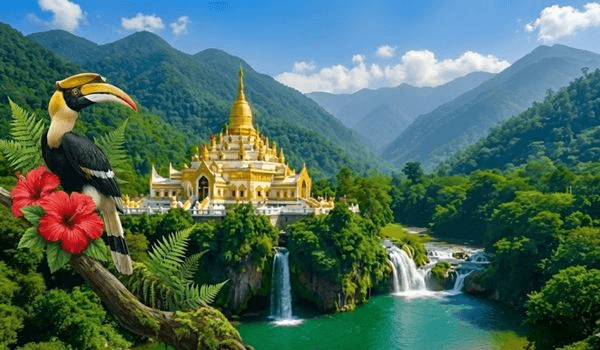
Malaysia: A Guide to Its Multicultural Cities, Jungles & Islands
Explore Malaysia, where vibrant multicultural cities like Kuala Lumpur and Penang meet ancient jungle regions and calm, beautiful islands. Your 2025 travel guide.
Malaysia is not one story but a thousand smaller tales woven together into a vibrant tapestry of cultures, landscapes, and histories.
It’s a place where shimmering skyscrapers in Kuala Lumpur share a skyline with ancient rainforests, and where the sizzle of a street-side wok is as much a part of the national soundtrack as the call to prayer or the gentle lapping of waves on a tranquil island shore.
This is a nation of compelling duality, a blend of Malay, Chinese, Indian, and indigenous influences that creates a society unlike any other in Southeast Asia.
For the curious traveler, Malaysia offers a journey of endless discovery, where one day you can be navigating the urban maze of a bustling metropolis, and the next, you’re listening to the symphony of the jungle in the heart of Borneo.
The Urban Heartbeat: Cities of Culture and Flavor
The journey for many begins in Kuala Lumpur (KL), a city that embodies Malaysia’s ambitious modernity.
While the Petronas Twin Towers dominate the skyline, the city’s true character is found on the ground.
Dive into the sensory overload of Petaling Street in Chinatown, a chaotic, wonderful bazaar of sights, sounds, and smells where bargaining is a sport and the street food is legendary.
For a more local Kuala Lumpur experience, consider staying in Cheras, a sprawling, self-sufficient suburb southeast of the city center.
It's a world away from the tourist-centric Golden Triangle.
Cheras is a land of endless 'tamans' (housing estates), bustling local markets, and a food scene that is both authentic and incredibly affordable.
Here, life revolves around neighborhood shopping centers like Cheras Leisure Mall and the legendary Taman Connaught Pasar Malam, a Wednesday night market that stretches for over two kilometers, offering everything from savory laksa to the infamous stinky tofu.
Further north, the island of Penang and its capital, George Town, offer a completely different urban rhythm.
A UNESCO World Heritage Site, George Town is a living museum of colonial architecture, vibrant street art, and clan jetties built on stilts over the water.
The city is a feast for the senses, from the aromatic spice shops of Little India to the grand Chinese clan houses like Khoo Kongsi.
Food here isn't just a meal; it's a cultural obsession.
Head to Chowrasta Market to see local life in full swing, and spend your evenings at hawker centers, debating the merits of the best char kway teow or assam laksa, where a deeply satisfying bowl can cost as little as $2-3.
Borneo's Wild Soul: Kuching and the Rainforest
A short flight across the South China Sea lies Malaysian Borneo and the state of Sarawak, a land of dense jungles, mighty rivers, and rich indigenous culture.
Its capital, Kuching, is arguably one of Southeast Asia's most charming cities.
Known as the 'Cat City', its relaxed waterfront, colonial-era buildings, and fascinating museums like the Borneo Cultures Museum provide a gentle introduction to the wilder adventures that await.
From Kuching, the ancient rainforest is your playground.
Visit the Semenggoh Wildlife Centre to see semi-wild orangutans in a natural setting or explore Bako National Park, where proboscis monkeys and bearded pigs roam freely amongst dramatic sea stacks and secluded beaches.
The experience of trekking through a 130-million-year-old rainforest like Taman Negara is a profound reminder of nature's enduring power.
Island Escapes and Practical Realities
When the call for sun and sand becomes irresistible, Malaysia’s islands deliver serene beauty.
Destinations like the Perhentian Islands or Tioman Island offer crystalline waters, vibrant coral reefs for snorkeling and diving, and a pace of life that forces you to slow down.
They are the calm counterpoint to the energy of the cities.
Navigating Malaysia is refreshingly straightforward and affordable.
Major cities have efficient public transit systems, including KL's extensive MRT and LRT lines, which make exploring suburbs like Cheras a breeze.
For staying connected, a local SIM card is essential; providers like Digi or Celcom offer excellent tourist packages available at the airport.
One crucial consideration is safety, particularly in eastern Sabah.
Official travel advisories consistently warn against all but essential travel to the coastal islands and dive sites off eastern Sabah due to a persistent threat of kidnapping.
While the mainland of Sabah is considered safer, travelers must exercise a high degree of caution and check for the latest government advice before planning any trips to the region.
From the incredible value of its street food—a hearty plate of nasi lemak can still be found for around $1-2—to the warm hospitality of its people, Malaysia offers a journey that is as enriching as it is accessible.
It’s a country that defies simple categorization, rewarding those who embrace its beautiful complexity with an experience that lingers long after they depart.
Frequently Asked Questions
What is the best way to travel around Malaysian cities?
Public transportation in Malaysia, especially in Kuala Lumpur, is highly efficient and cheap. The network includes the MRT, LRT, monorail, and an extensive bus system. Ride-hailing services like Grab are also widely available and affordable for covering shorter distances or areas not served by rail.
Is Malaysia an expensive country to visit?
Malaysia is known for being an excellent value destination. Food, accommodation, and transport are significantly cheaper than in Western countries. A budget traveler can comfortably get by on $30-50 USD per day, especially by eating at local hawker centers and using public transit.
What should I know about the culture in Malaysia?
Malaysia is a multicultural society with deeply ingrained influences from Malay, Chinese, and Indian cultures. This fusion is evident in its food, festivals, and languages. Malaysians are generally warm and welcoming. When visiting mosques or temples, it is important to dress modestly by covering shoulders and knees. |
0 Comments
Join the conversation
Be the first to comment
Share your thoughts above.