Warsaw, Poland: A Thriving Tech Hub Offering Affordable Living for Remote Workers
Explore how Warsaw's growing tech scene and affordable lifestyle make it an ideal destination for digital nomads.
The Tech Hub Where $550 Gets You a Modern Apartment and Pierogi Cost $3
Warsaw combines a startup scene with a reconstructed old town at $1,250 per month. Here is what Poland's capital delivers for remote workers.
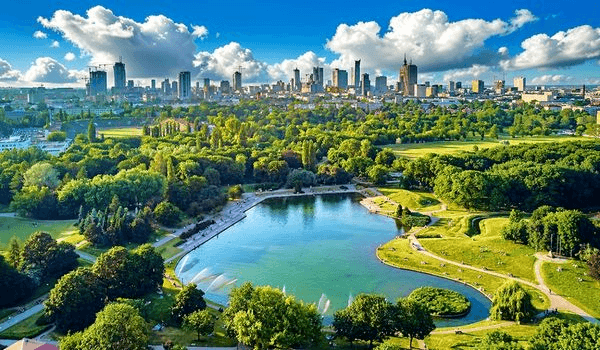
The rebuilt city was 85 percent destroyed in WWII but now thrives as Central Europe's tech powerhouse. This is life in Poland's resilient capital.
A software developer in Portland pays $2,600 monthly for a one bedroom apartment with constant rain. Making $96,000 annually, but after rent, car expenses at $490, health insurance at $360, and student loans at $440, saving barely happens.
Remote workers in Warsaw's Śródmieście district pay $550 for modern one bedroom apartments with balconies, contemporary design, and fiber internet. The reconstructed Old Town is nearby. A thriving startup ecosystem.
"I moved for the tech scene and affordability," one remote worker shared in Warsaw expat forums. "But Warsaw surprised me with resilience. The city was rebuilt after 85 percent destruction in WWII. Now it is a booming tech hub. Google and Microsoft offices. Startup energy everywhere. Portland felt stagnant despite the costs. Warsaw delivers an emerging tech culture with authentic Polish food and European sophistication at Central Europe's lowest costs."
Same income. Different costs. Different tech energy.
The Truth
Most people think Warsaw means gray communist blocks, Soviet architecture, depressing history, and postwar rubble. Warsaw reveals a dynamic reality. This is Central Europe's fastest growing tech hub, with a thriving startup scene attracting Google and Microsoft, a meticulously reconstructed Old Town UNESCO site, a 1,500 plus digital nomad community, modern infrastructure rivaling Western Europe, and authentic Polish culture at a fraction of Berlin or London costs. And it costs 70 percent less than major European capitals.
The city transformed from WWII devastation into a modern metropolis. The Old Town was rebuilt brick by brick using historical paintings. The communist Palace of Culture contrasts with glass skyscrapers. Choosing between modern business districts versus residential neighborhoods determines corporate energy versus authentic Polish neighborhood life, with both offering excellent quality at low prices. |
Travel Trivia ❓
Question: Warsaw's Old Town, designated a UNESCO World Heritage site in 1980, was unique in receiving this status specifically for what reason, making it different from all other historic cities?
A) Being the oldest European city |
What's the cost?Visa: Can You Legally Do This?
Pro tip: Start with a 90 day Schengen visa. Poland is welcoming to remote workers with a straightforward residence permit process for longer stays.
The Real NumbersAVERAGE DAILY COST: $42 to $58 per person, per day
Monthly Cost Breakdown
ANNUAL SAVINGS: $42,600
What You Need to Know
Best areas: Śródmieście city center for convenience. Mokotów for residential charm and parks. Praga district for hipster culture and cheaper rents. Żoliborz for quiet residential areas with greenery. Cultural respect: Learn basic Polish phrases. Poles appreciate effort with the difficult language. Punctuality matters in professional settings. Catholic traditions influence the culture. Where to work: Google Campus Warsaw for startups. Mindspace coworking. Brain Embassy. Every café welcomes laptops with a strong coffee culture. Home fiber from 300 to 600 Mbps is available citywide. Top Hospitals: Medicover Hospital, Carolina Medical Center, Centrum Medyczne Damiana. Quality private healthcare at European standards with many English speaking doctors. Key Experiences
Weekend trips: The medieval city of Kraków is 2.5 hours south for the old town and Auschwitz. The coastal city of Gdańsk is 3 hours north for beaches and shipyard history. Białowieża Forest is 3 hours east of Europe's last primeval woodland. Berlin, Germany, is 5 hours west. |
The Community
Emerging nomad scene: 1,500 plus digital nomads concentrated in Śródmieście make Warsaw Poland's largest hub and Central Europe's most affordable. Google Campus hosts weekly events. Facebook Warsaw Digital Nomads has 4,000 plus members. A strong tech focus with developers, designers, and marketers. A mix of Europeans, Americans, and Ukrainians aged 25 to 45. The Polish language is difficult, but the younger generation speaks English well, especially in tech circles.
Coworking Culture: Google Campus leads the scene with a strong focus on startups and community. Modern spaces like Mindspace cater to corporate and freelance professionals.
Expat Community: A growing, international community including many from Ukraine, other EU countries, and global tech professionals. Active social and professional networks.
Language Learning: Polish is very challenging, but learning greetings is appreciated. Language schools offer courses. English proficiency is high in business and among youth.
Your Next Steps
P.S. The first time a remote worker finishes work at Google Campus, walks through the reconstructed Old Town for $3 pierogi, then joins a tech meetup... Warsaw's emerging hub energy becomes addictive.
Answer to Travel Trivia 💡
Answer: C) Being completely reconstructed after destruction. UNESCO recognized Warsaw Old Town for the meticulous reconstruction effort after 85 percent WWII destruction using 18th century paintings, making it the first and only World Heritage site honored specifically for reconstruction rather than original preservation, representing Polish determination to rebuild cultural heritage. |
Don't forget, you can book your flights directly from the bottom of this page. Happy travels! |
0 Comments
Join the conversation
Be the first to comment
Share your thoughts above.