Digital Nomad Honduras in Honduras: The Bay Islands No One Told You About
Discover bay islands remote work and cost of living honduras options
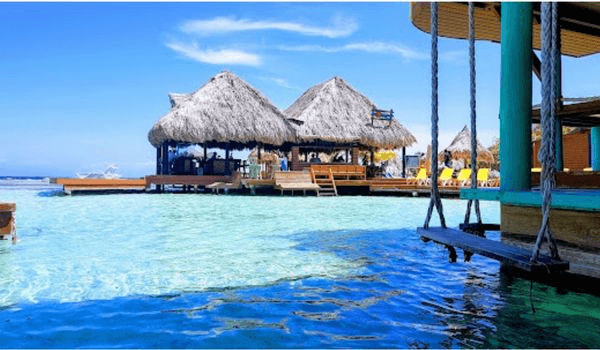
You were told Honduras was too dangerous. And for the mainland, that warning still carries weight. But the Bay Islands are a different country inside the same country, a chain of Caribbean islands 50 kilometers off the northern coast where the dominant language is English, the dominant currency is the US dollar, and the dominant concern for most expats is the quality of the sunset. Roatan has been quietly filling up with retirees, remote workers, and location-independent professionals who ran the numbers and realized they had found something rare: a true Caribbean lifestyle at a fraction of Caribbean prices, inside a territorial tax system that does not touch a single dollar you earn from outside Honduras. Most people never get there because they stop reading at the headline. That is a meaningful advantage for the people who do not.
Geo-Metric Score: 7.1 out of 10 Efficiency Score: 8.4 out of 10
The Efficiency Score is high because Honduras delivers an outsized lifestyle return per dollar spent. The Geo-Metric Score is tempered by the mainland security situation, limited nomad visa infrastructure, and variable internet connectivity outside urban centers and Roatán.
Friction factors: No dedicated digital nomad visa. Mainland cities carry genuine safety risk requiring deliberate neighborhood choices. Internet speeds are inconsistent outside Roatan and Tegucigalpa's expat zones. All residency applications require a licensed Honduran attorney. Spanish is essential on the mainland; English works well in Roatan and the Bay Islands.
VISA PATHWAY
Honduras does not offer a digital nomad visa as of mid-2026. US citizens and most Western nationals enter visa-free as tourists for up to 90 days, extendable. Honduras is part of the CA-4 agreement with El Salvador, Guatemala, and Nicaragua, meaning your 90-day clock runs across all four countries combined, not per country.
For longer stays, Honduras offers two residency pathways that rank among the most accessible in the region. The Rentista visa requires proof of $2,500 per month in passive income from a foreign source, covering dividends, rental income, annuities, or investment returns. The Pensionado visa requires proof of $1,500 per month from a guaranteed foreign pension or retirement fund, though in practice many applicants without formal pensions have used the Rentista category. Both pathways grant indefinite residency as long as you visit Honduras at least once every 12 months. You do not need to live there.
For investors, a minimum investment of $50,000 in an approved sector plus a $5,000 deposit with the Central Bank of Honduras qualifies for the investor residency category.
WHERE TO BASE YOURSELF
Roatan is the anchor destination for most location-independent professionals considering Honduras. The island sits about 50 kilometers off the Caribbean coast, accessible by 45-minute flights from Tegucigalpa and San Pedro Sula or by ferry from La Ceiba. English is widely spoken across the island due to its British colonial history, which is unusual for Central America and removes the language barrier that stops many nomads from considering Honduras at all.
The West End and West Bay neighborhoods are the core expat and nomad zones, with walkable restaurant and cafe strips, reliable coworking infrastructure at Roatan Cowork in the West End, and a security environment that is categorically different from the mainland. Petty theft and scooter accidents on the poorly lit main road are the primary concerns. Gang-related violence, which drives the mainland statistics, is largely absent. Monthly budget for a comfortable solo nomad in Roatan runs $1,500 to $2,500, with a one-bedroom apartment in the tourist zones running $500 to $1,000 per month, often priced in US dollars. The island is more expensive than the mainland but remains far cheaper than comparable Caribbean destinations like the Caymans, Barbados, or the USVI.
Tegucigalpa offers a lower-cost urban base for nomads willing to navigate mainland Honduras with awareness. Monthly cost for a comfortable solo nomad runs $1,000 to $1,500. The safe neighborhoods for expats are concentrated in Lomas del Guijarro, Colonia Palmira, and El Hatillo, where gated buildings, reliable infrastructure, and proximity to international services make day-to-day life manageable. Coworking options exist, including Easyofficehn and Widú. Spanish is essential. The US State Department maintains a Level 3 Reconsider Travel advisory for Honduras overall, and the capital recorded 73 homicides per 100,000 inhabitants in 2025, a figure that requires honest acknowledgment. The expat community in Tegucigalpa is composed primarily of NGO workers, development professionals, and a smaller but growing number of remote workers who have made deliberate lifestyle choices about their base.
San Pedro Sula, Honduras's second-largest city and industrial hub, has a coworking scene including SinergiaHN, Workspace, and NH Work. The city's security reputation is severe, with homicide rates among the highest in the world. Expats who do base here concentrate in Colonia Trejo and Los Andes and move carefully. It is not a recommended base for first-time visitors to Honduras.
Utila, the smaller Bay Island neighbor of Roatan, is cheaper and draws a younger backpacker and dive crowd. Infrastructure is more limited but the cost of living drops further, and the community is tight-knit.
COST OF LIVING SNAPSHOT
Honduras is one of the cheapest countries in the Western Hemisphere by most measures. The Honduran lempira trades at approximately 25 to the US dollar. Overall cost of living runs roughly 41% lower than the United States when housing is excluded, and rent is approximately 72 to 73% cheaper than US averages. On the mainland, a single expat can live comfortably in Tegucigalpa for $1,000 to $1,500 per month all-in. On Roatan, the same comfortable lifestyle runs $1,500 to $2,500 given the island premium on imported goods and the dollarized rental market in expat zones. Street food staples like the baleada, a flour tortilla with beans, cheese, and cream, run $0.50 to $1.50. A meal at a local restaurant costs $3 to $8. A good dinner at a tourist-facing restaurant in Roatan's West End runs $15 to $25. A one-bedroom apartment in Tegucigalpa's upscale neighborhoods runs $320 to $480 per month at current exchange rates. Healthcare is available at private hospitals in Tegucigalpa and San Pedro Sula at a fraction of US cost, and Roatan has a hyperbaric chamber and medical facilities geared toward the dive community.
CONNECTIVITY
Internet infrastructure is improving but inconsistent. San Pedro Sula leads the country for business-grade connectivity. Tegucigalpa's expat neighborhoods have serviceable speeds for remote work, and coworking spaces in both cities provide more reliable connections than residential options. Roatan's infrastructure has improved with the growth of the expat community, and Roatan Cowork in the West End offers high-speed internet with a backup generator, essential given the island's occasional power interruptions. Nomad List rates Tegucigalpa at approximately $1,328 per month with 7 Mbps average speeds, flagging it as a challenging nomad destination on connectivity alone. Roatan performs better in practice for nomads working from established coworking spaces rather than relying on residential connections.
LIFESTYLE AND COMMUNITY
The Bay Islands have one of the most established English-speaking expat communities in Central America. West End and West Bay on Roatan are genuinely walkable, socially active zones with dive shops, yoga studios, craft breweries, and a social calendar built around the water. The Ask Anything Roatan Facebook group is the practical community hub for newcomers. Charity events, Sunday craft fairs, and corn-hole leagues fill the social calendar for those who want community structure. The mainland culture is warm and hospitable but moves more slowly, and building genuine community requires Spanish fluency and patience. Honduras as a whole offers scuba diving in the Mesoamerican Reef, hiking in the cloud forests around Tegucigalpa, whitewater rafting near La Ceiba, and the colonial town of Copan Ruinas near the Guatemalan border, home to one of the most significant Mayan archaeological sites in the region.
HONEST ASSESSMENT
Honduras is not for everyone. The mainland security situation is real, not merely perception, and requires either a high tolerance for navigating risk or the decision to base primarily in Roatan where that risk is categorically lower. The absence of a digital nomad visa is a genuine limitation compared to Guatemala and El Salvador, and the residency process requires an attorney and several months of patience. But the people who do the work and commit find something that most of the Caribbean has long since priced out of reach: territorial tax protection, affordable Caribbean island living, a genuine English-speaking community, and a residency pathway accessible at income levels far below what Panama, Costa Rica, or any island nation in the wider Caribbean requires. The flag theory case for Honduras is real. It just takes more due diligence than the countries that have built their entire branding around making it easy for you.
💡 Answer to Trivia
10 percent. The Mesoamerican Reef stretches roughly 1,000 kilometers from Mexico's Yucatan Peninsula through Belize, Guatemala, and Honduras, with the Honduran section covering about 100 kilometers along the Bay Islands and north coast, making it one of the most biodiverse coral ecosystems in the Western Hemisphere.
Disclaimer: This article is for informational purposes only and does not constitute legal, tax, or financial advice. Immigration rules, visa requirements, and tax laws change. Verify all information with official Honduran government sources and consult a licensed attorney and tax professional before making any residency or relocation decisions. |
Ready to book your next flight? Look no further! Simply scroll to the bottom of this page and click to book your tickets now! Don't miss out on these amazing deals - book your flight today! 🌍🛫✈️ #travelgoals #flightdeals #booknow |
0 Comments
Join the conversation
Be the first to comment
Share your thoughts above.